
Tag: COVID-19

  • A Guide to Reopening Your Business After Covid-19

    A Guide to Reopening Your Business After Covid-19

    You can almost hear it.

    Across the country light switches are flipping, the roads are getting busy, computers and other machines are powering back up. People are getting back to work.

    After months of closing workplaces, businesses, and enforcing social distancing, countries have begun to reopen their economies. We are slowly but surely getting back to our normal day to day living. This has presented business owners with new risks.

    Businesses that reopen may be affected by the post lockdown risk, and companies that reopen irresponsibly may find themselves not faring well in a recovering economy.

    Like me, I’m sure everyone is eager to get back to work, but life after COVID-19 can be confusing. The way things worked previously isn’t how it will work now, especially early on after the lockdown. The best way to be successful is to ensure the safety of your workers and customers.

    Below is a list of guides or tips that will guide you as you reopen your business. Remember, every business is different, so you must tailor each of these to suit your type of business.

    Avoid Personal Contact

    Making a “no personal contact” rule will go a long way in ensuring the safety of your workers and customers. Handshakes and hugs are the most common form of physical contact, especially in the business world, but they don’t belong in a post COVID-19 world.

    But you have to make rules to ensure no physical contact until later phases of reopening. You could also use an alternative way of communication in your workplace that doesn’t involve physical contact.

    Avoid Large Gatherings

    As we all know, humans are social animals. There is an uncontrollable need to communicate and gather. Every community has a place where people gather to make jokes, gossip, and talk in general, and so does every workplace.

    Right now, this must be stopped. So, it would help if you made rules that prevent people from gathering people in a place.  

    Readjust Your Floor Plan

    Readjusting your floor plan to create more distance or space between your employees and also your customers is a good safety measure. Also, adjust your employees to face walls instead of each other.

    Avoid Item Sharing

    Items like pens, notebooks, and folders could be assigned to specific workers, or you could simply digitalize your workplace. This will reduce contact between your workers and also maximize work time.  Shared tools must be sanitized before and after each employee uses them.

    Adjust Breakroom Rules

    Everyone needs a respite from working, so how you handle the breakroom rule is essential. If your business has a breakroom, then adjusting the break time of each department will help avoid large gatherings.

    Limit the Number of People In a Closed Room

    It’s best to limit the number of people in closed rooms like conferences, seminars, and board meetings.  Each phase will have different specifications.

    Hand Sanitizing Stations

    Creating sanitizing stations is compulsory. Maintaining sanitizing stations for both your workers and your customers ensures both safety and customer confidence. If your place feels risky, customers might not do business with you.

    Disinfecting and Cleaning Your Business Place

    Coronavirus can survive on the surfaces of objects for some time, so it’s best to disinfect and clean your business periodically. This helps to kill the virus on every surface in your office. You might think this is too stressful, but remember safety builds customer confidence and, in turn, generates profits.

    Proper Disposal

    Ensure your employees dispose of used items properly. Providing lined trash bins for disposal is important.

    Posters and Notices

    Office rules, including placing notices about COVID-19 precautions, safety, and contact procedures, can help inform and educate both employees and clients.

    Laws and Policies

    Reviewing and updating your policies following the country and state laws will help your business avoid issues.

    Thanks for checking our guide, and if you find this article useful, please pass it on. Or if you need someone to look over your policy, contact us. Stay safe.
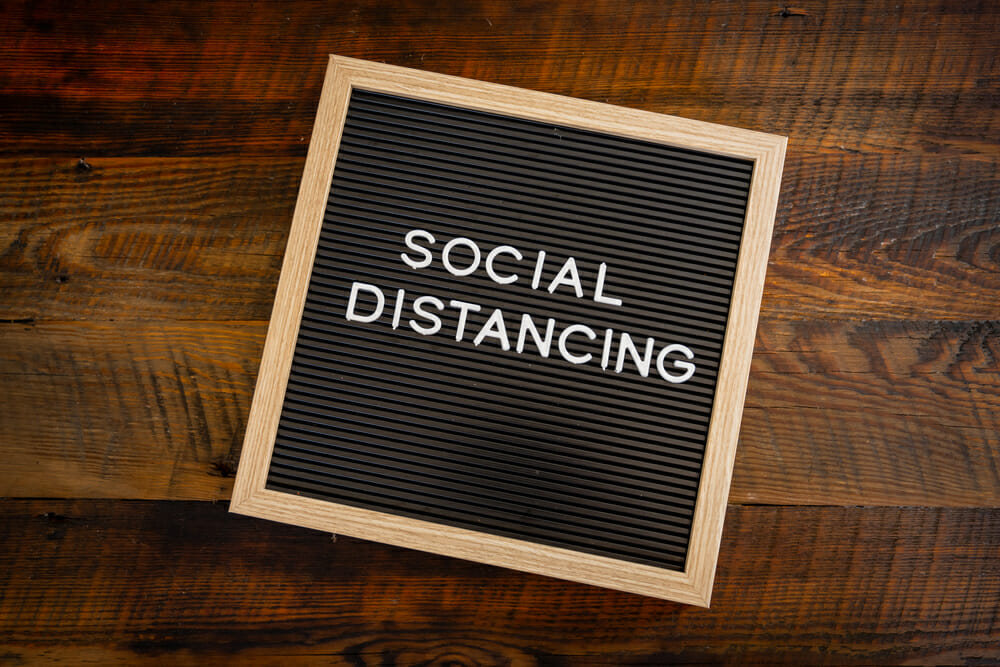

  • Physical Distancing vs. Social Distancing

    Physical Distancing vs. Social Distancing

    The changes we are experiencing from the Covid-19 pandemic might run deeper than we think. In just 4 months, so much has changed: the way we conduct businesses and relate with each other.  And now, even our psychological well-being during and after the pandemic might be affected as well due to social distancing.

    Steps have been taken all over the world to contain the spread of this virus as much as possible. The core idea behind these steps is keeping a certain distance from each other. For example sheltering-in-place, quarantine, and lockdown work under the premise of social distancing.

    The idea behind social distancing is one that scientists and health professionals believe will stop the spread of the virus. It demands that we stay away from gatherings and maintain at least 6 feet from each other.

    While this is effective (after all the society has bought into it), are we practicing social distancing the right way?

    The question then is, “Is this really social distancing, or do we need a reframing?” Many psychologists seem to think that we do need a new phrase to better embody the idea of staying apart to stay safe. Social distancing implies a total cessation of human interactions – both physically and mentally.

    Rather than social distancing, psychologists think that what we need is physical distancing.  Simply put, physical distancing means reducing close contact with others. The problem with social distancing is that its effects might not be so glaring now.

    After the pandemic is over, social distancing could have serious negative impacts on the psychological well-being of people.

    Jamil Zaki, Associate professor and psychologist at Stanford explains in this article that humans need to maintain a connection with each other, especially now. In times of distress, people stay grounded when they feel the care and presence of others around them.

    While we practice physical distancing, we need to find a way to be together even while apart. Thankfully, technology makes it easy for us to interact socially. Some apps and social media platforms make virtual social interactions accessible. Let’s take a look at some of them.

    Zoom

    This pandemic would forever change the trajectory of businesses and the way they are run. With Zoom, people can still carry out their business activities with video calls and make deals from the comfort of their homes. Alternatively, friends can also use Zoom to organize virtual coffee dates with each other.

    Video Calls

    Voice calls can only go so far. At some point, you’ll want to see your friends and family in real-time.   Whatsapp, Messenger, Instagram and very recently, Facebook all have video call options. You can stay apart from your friend physically, but nothing says you can’t call them up. These apps are more common than Zoom, so even if your friend doesn’t have Zoom, you can still see them in real-time.

    Group Activity Apps

    This pandemic has made some group activity apps very popular. Applications like House party, Netflix Party, and TikTok are making waves. These applications have provided a way for humans to remain social with each other.

    Since the lockdown, TikTok challenges have provided a virtual bridge where friends can meet and do fun stuff. House Party is another application that is providing the necessary service of human interaction.

    Being on lockdown doesn’t mean you can’t keep yourself entertained with your family and friends. Netflix Party has made it possible for friends to watch movies together and even chat while at it.

    To conclude, social distancing might not be what you and I need at this point. Being socially distant at this time could have severe psychological impacts on us. Hence, the need for socialization through virtual means.

    Remember also that the only way to flatten the curve of infections is to distance ourselves from each other but only physically, not socially. Stay home, stay safe, stay connected.

    From all of us here at Sound Accounts, we are wishing you a safe and speedy end to this quarantine. Please feel free to connect with us virtually

  • COVID-19 Resources for WA Business Owners

    COVID-19 Resources for WA Business Owners

    We want to be a resource to our clients, friends, family, and other small business owners.  Therefore, we have put together information on various programs available in response to COVID-19.

    Small Business Administration

    The Small Business Administration is going to be a central resource for business owners in this crisis.  Information on the Paycheck Protection Program, the Economic Injury Disaster Loans and Loan Advance at this website.

    Internal Revenue Service

    Additionally, the IRS has established a special section focused on steps to help taxpayers, businesses, and others affected by this crisis.  Their page is updated as new information is available.  For example, the IRS has extended tax filing and payments until July 15. They also offer advice for deducting COVID-19 costs from your taxes here.  The IRS has also dedicated an entire page to the economic impact payments here.

    Consumer Financial Protection Bureau

    Additionally, planning for the financial impact of COVID-19 can be daunting. To help, the Consumer Financial Protection Bureau has put together some great resources and ideas on their website. These include links to articles about meeting your financial obligations, experiencing a loss of income, and being targeted by scammers.

    Coronavirus Aid, Relief, and Economic Security Act (CARES Act)

    You could spend your days reading over this 335 page act. Or there is a great summary of this act available through the SBA, as mentioned above. The Department of the Treasury has also put together a comprehensive summary.

    Washington State Coronavirus Response (COVID-19)

    The state has put together a conglomeration of information all in one place on this website.  On their Business & Workers page, you can find guidance on what businesses are considered essential. You can also find a form you can submit to clarify if your business is essential, here

    Washington Department of Revenue

    Whether your business is essential or not, the Washington Department of Revenue has announced some relief for businesses. These address a broad range of taxes and programs including business and occupation tax, leasehold excise tax, and many more.  Find more information here.

    Washington Employment Security Department

    However, if taxes are the least of your worries, eligibility for unemployment benefits has been expanded to include many Washingtonians that have not been eligible in the past.  The Employment Security Department has information regarding COVID-19 here and you can subscribe for updates to this information here

    Washington State Department of Labor & Industries

    While this department is focused on workers’ compensation, there is a PDF on their website about Paid Sick Leave, Paid Family and Medical Leave, and workers’ compensation here.  Governor Jay Inslee and L&I Director, Joel Sacks, have also spoken about extending workers’ compensation coverage to quarantined health workers and first responders on this site.

    United Way of Washington 

    While financial help for small businesses is amazing, what if you need other types of help? Assistance through the United Way is managed on a county level.  This site will help you connect with your specific county.  The county sites have links to health updates; health information; financial assistance for individuals, businesses, and non-profits; expense support; food support; school operation plans and meals; various supportive services; a list of hiring employers; and other employment related resources.

    Other Assistance

    We encourage everyone to reach out to their landlord, creditors, and lenders if you find yourself having difficulty making payments.  Many will continue to work with you throughout this crisis, but communication is key. 

    Your Sound Accounts team hopes you are all staying healthy and well. We look forward to seeing you once we have made it through this crisis, together!    Please feel free to reach out to us with any questions or concerns you may have.